Perimeter security has long depended on a familiar formula: fixed cameras, scheduled patrols, and human teams covering as much ground as possible. Asylon is part of a newer model — one that adds robotics to the perimeter, extends visibility into hard-to-cover areas, and keeps human oversight at the center of the system.
Large facilities, logistics yards, infrastructure sites, and high-value properties all share the same problem: too much ground, too many blind spots, and too many moments where a delayed response can turn into a real security gap. Traditional security systems still matter, but they can struggle to deliver continuous awareness across complex perimeters. That is the space Asylon is built for.
Asylon describes its offering as robotic perimeter security delivered through a managed service. Its system combines aerial drones and ground robots with AI and human monitoring, giving clients a way to add continuous patrol coverage, alarm verification, and live situational awareness without having to build and run a robotics program themselves.
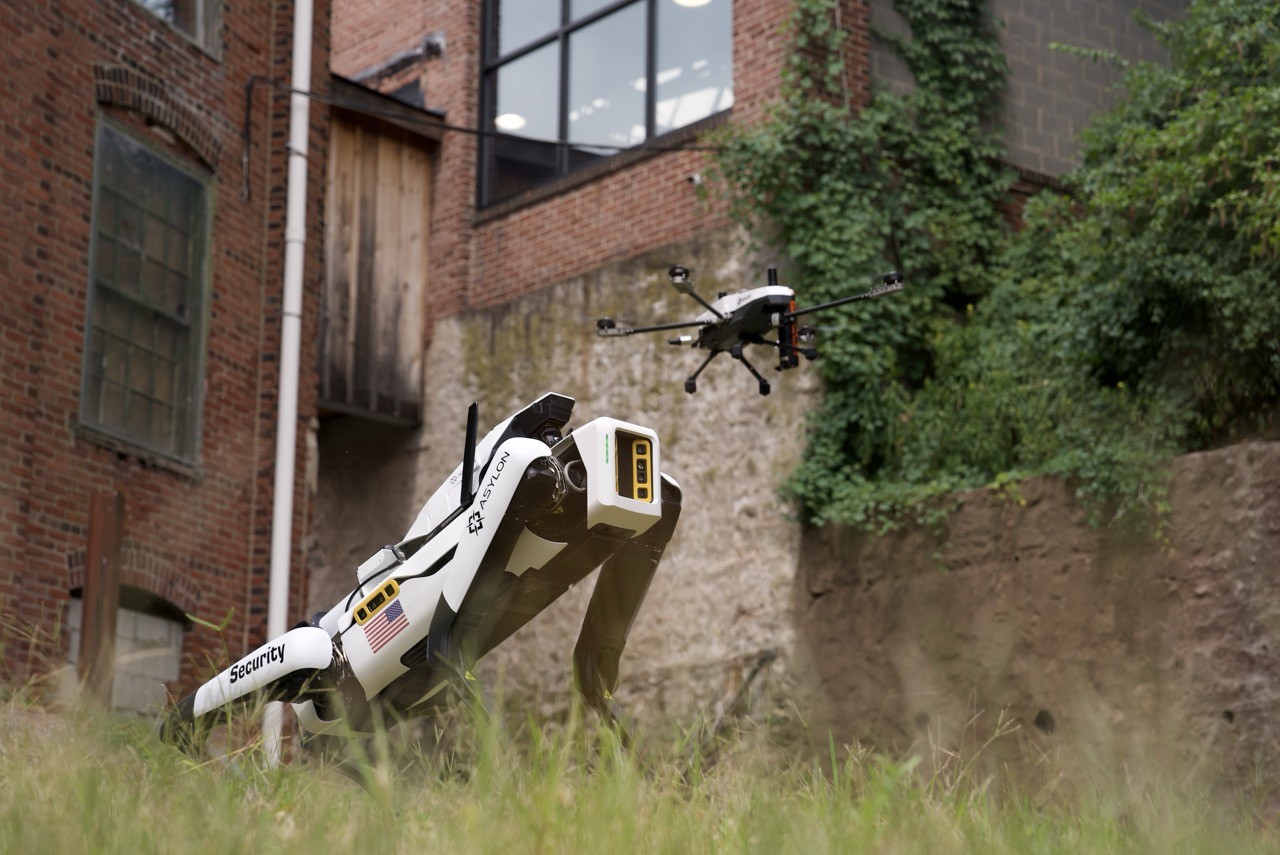
Two parts of that system appear often in Asylon’s materials: Guardian drones and DroneDog ground robots. According to the company, Guardian provides managed aerial monitoring with features such as optical zoom and thermal sensing, helping teams verify alarms and monitor large areas with fewer blind spots. DroneDog adds persistent ground coverage as part of a broader perimeter framework, creating a layered approach that moves both across the ground and above it.
What makes that model compelling is not only the hardware, but the structure around it. Asylon emphasizes that its platform is supported by continuous AI and human oversight, including a robotic security operations center that coordinates activity and maintains live monitoring. The company also frames its service as a force multiplier rather than a replacement for security personnel, arguing that drones and robots handle routine patrols and verification so human teams can focus on judgment, response, and decision-making.
That distinction matters. The strongest use of robotics in security is rarely about removing people entirely. It is about extending what people can see, shortening the time between an alert and a verified understanding of the situation, and improving consistency across wide or difficult environments. In that sense, Asylon’s approach feels less like a gadget story and more like an operations story — using automated systems to support a stronger, more responsive perimeter.
As more organizations look for scalable ways to protect larger footprints, Asylon points to a future where robotic patrols are not unusual add-ons but part of the normal security stack. Drones in the air, robots on the ground, and people making decisions from a position of better information — that is the model the company is building toward.
Modern perimeter security works best when robotics expand visibility and people remain in control of the response.